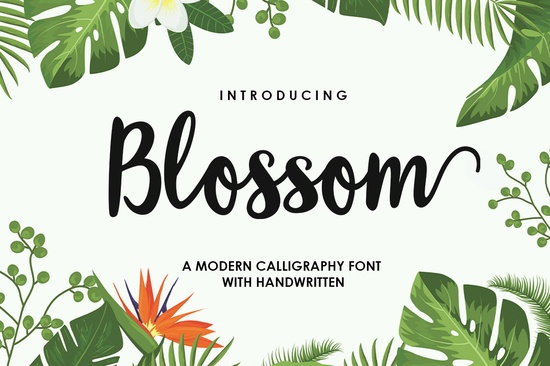
Finding the right lettering for a boutique logo or a custom wedding invitation can take hours of scrolling through endless directories. If you want a handwritten look that feels personal but remains highly legible, the Blossom Script Font is a highly practical choice for your next project. It is a modern typeface built with extensive alternate characters, including sweeping initial and end swashes. This flexibility allows designers, print-on-demand sellers, and creative hobbyists to customize their text so it looks genuinely hand-lettered rather than simply typed on a keyboard.
What makes this typeface different from standard cursive fonts?
Most basic cursive typefaces repeat the exact same letterforms, which makes long phrases look artificial and stiff. This particular design solves that problem by including multiple variations for uppercase and lowercase letters. When you access the glyphs panel in your design software, you can swap out standard characters for ones with beautiful entry and exit strokes. The varying baselines and overlapping connections mimic real penmanship. If you are working on a rustic project and want something with a slightly more traditional country feel, you might also look at our favorite rustic lettering options to compare the different stroke weights and textures.
How can small businesses and crafters apply this lettering?
The sweeping swashes make it incredibly useful for physical products and merchandise. Print-on-demand sellers often use this kind of flowing typography on coffee mugs, canvas tote bags, and custom apparel. Because the letters connect smoothly, the design scales well when printed on fabric or laser-engraved on wood. Small business owners creating product packaging or handwritten thank-you cards will find that the delicate curves add a premium, handcrafted touch to their branding. For those designing baby shower materials or birth announcements, pairing this with a softer, more delicate typeface designed for baby themes can create a very gentle, welcoming aesthetic for the parents.
Which design programs support the alternate characters?
To actually use the initial and end swashes, you need software that fully supports OpenType features. Professional tools like Adobe Illustrator, Adobe InDesign, and Affinity Designer have a dedicated glyphs panel where you can easily click and insert these special characters. If you are a hobbyist using basic online editors or standard word processors, you might not have access to the full glyph set, meaning you will only see the standard alphabet. For users who prefer a slightly more playful and relaxed vibe in their casual crafting projects, checking out these fun, bubbly lettering styles might give you some alternative ideas for less formal designs.
What fonts pair well with this flowing style?
Because the lettering is highly decorative and features elaborate swashes, it needs to be balanced with something very simple and grounded. A clean, minimalist sans-serif font works best for the body text or secondary information. For example, if the main title of a poster uses these elaborate cursive strokes, the date, time, and location details should be set in a basic, easy-to-read geometric font. If you want to explore other elegant options for your main headings, you can browse these beautiful, sweeping calligraphy styles to see how different stroke contrasts affect the overall layout. Additionally, this lovely, smooth handwritten alternative is another great choice if you need a slightly narrower fit for your text boxes.
How do you install and access the extra glyphs?
Once you download the files, you will usually get both OTF and TTF formats. Always install the OTF version if possible, as it holds all the advanced typographic features and alternate characters. Here is a quick checklist to ensure you get the most out of the typeface:
- Install the OTF file on your operating system and restart your design software if the font does not appear immediately.
- Type your phrase using the standard keyboard layout to establish your basic layout and sizing.
- Open the Glyphs panel (usually found under Window > Glyphs in Adobe programs) to view the hidden characters.
- Highlight a letter in your text and double-click the alternate version in the panel to swap it out.
- Adjust the kerning manually if the elaborate swashes overlap awkwardly with neighboring letters.
- Test the final design at the actual print size to ensure the thin strokes remain visible and do not break apart.
 Creative Typography: London's History Through Duo Fonts
 Our Farmhouse Font for Creative Projects
 Kangen Michella Font: Creative Projects and Uses
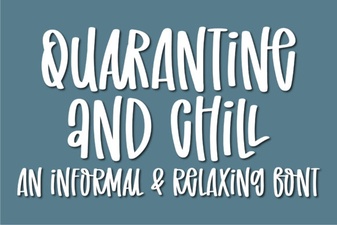 Quarantine and Chill Font for Creative Projects
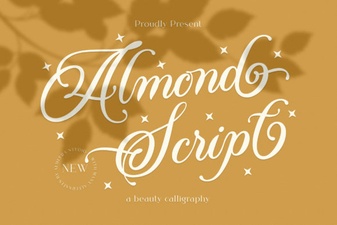 Almond Script: a Beautiful & Creative Font
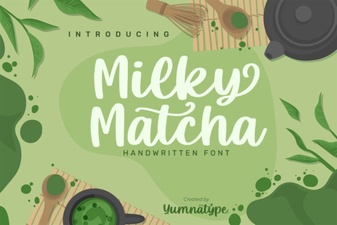 Milky Matcha Font: a Creative Design Toolkit