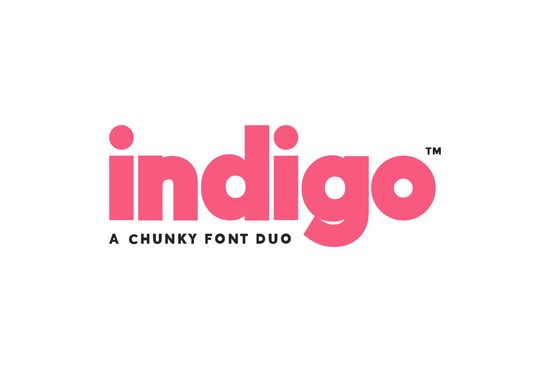
Finding the right typography for a new branding project or print-on-demand store often comes down to balancing readability with visual interest. When you need a versatile typeface that works across multiple mediums, the Indigo Font Duo Font offers a practical solution. It pairs a solid, highly legible sans serif with a matching outline version, giving you two distinct styles that share the same underlying geometry. This means you can mix and match them without worrying about clashing proportions.
Whether you are designing a logo for a small business, creating Instagram templates, or laying out headers for a website, having a built-in pairing saves time. You do not have to hunt for a secondary font that matches the weight and mood of your primary choice.
Why pair a solid sans serif with an outline version?
Mixing solid and outline text creates immediate visual hierarchy. The solid version naturally draws the eye and works best for primary headlines or crucial information. The outline version feels lighter and more decorative, making it ideal for subheadings, background watermarks, or secondary text elements.
This contrast is especially useful for crafters and small business owners who want their designs to look professional without hiring a typographer. If you are working on merchandise like tote bags or t-shirts, overlapping the outline style behind the solid text creates a subtle shadow or depth effect. For those who prefer a more rugged look, you might explore bold roadside style typefaces, but for clean, modern retail products, a refined duo keeps the focus on your message.
Where does this typography style work best?
The flexibility of a two-in-one font family means you can adapt it to almost any creative task. Here are a few practical ways to use it:
- Social Media Graphics: Use the solid weight for the main hook and the outline weight for the call to action.
- Logo Design: Combine both styles to create a layered wordmark that looks custom and sophisticated.
- Web Headers: Apply the outline version to large, oversized background text while keeping the solid version for readable navigation and sub-titles.
- Print on Demand: The clean lines scale perfectly for large format posters or small sticker designs.
If your current project requires a slightly different vibe, you can always look at clean minimalist choices such as this Kegast alternative for a stricter corporate feel. Alternatively, if your brand leans toward playful and approachable, softer rounded styles like this More Sugar option might be a better fit. However, for a balanced, edgy, yet sophisticated aesthetic, sticking with the Indigo family is highly effective. You can always browse more details on the Indigo sans serif family to see the full character map and available glyphs.
How do you handle letter spacing and alignment?
When working with outline fonts, the negative space inside the letters becomes just as important as the strokes themselves. If you tighten the tracking (letter spacing) too much, the inner spaces will close up and make the text difficult to read.
A good rule of thumb is to give outline text slightly more breathing room than solid text. Increase the tracking by 10 to 20 units in your design software to keep the letters distinct. When layering the outline version behind the solid version, ensure both text boxes share the exact same alignment points and baseline. Even a one-pixel misalignment will look messy when printed.
What software works best for these font files?
Since this is a standard font duo, it installs and functions like any other TrueType or OpenType file on your computer. It works seamlessly in Adobe Illustrator, Photoshop, and InDesign for professional vector and raster work. For crafters using Cricut Design Space or Silhouette Studio, the font will load directly into your system fonts folder and appear in the text dropdown menu. Just remember to weld or union your outline letters before cutting them on a vinyl machine to prevent the inner cutouts from falling out.
Quick checklist for your next design project
- Install both files: Ensure both the Regular and Outline versions are installed and activated in your design software.
- Test the hierarchy: Type out your headline in both styles to see which one commands more attention for your specific layout.
- Adjust the tracking: Loosen the letter spacing on the outline version to maintain readability.
- Check the contrast: If placing text over a busy background, add a solid backing shape or use the solid font weight to ensure it remains legible.
- Weld for cutting: If using a vinyl cutter, merge the outline paths so the machine cuts the outer and inner lines as a single continuous shape.
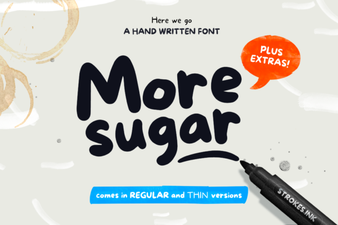 Playful and Friendly Typefaces for Creative Projects
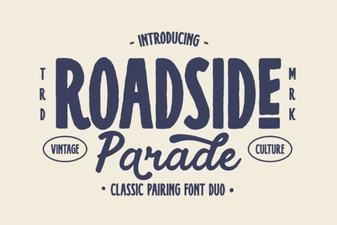 Roadside Fonts for Creative Projects
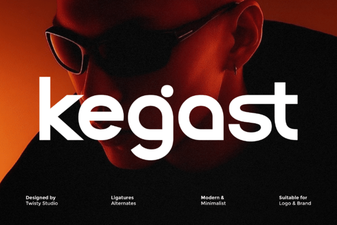 Introducing Kegast: a Font for Creative Typography
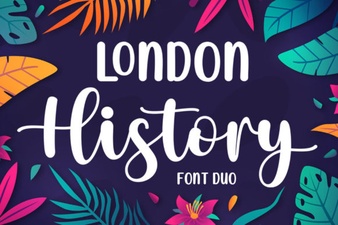 Creative Typography: London's History Through Duo Fonts
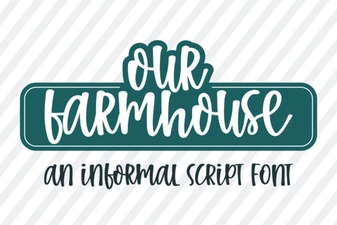 Our Farmhouse Font for Creative Projects
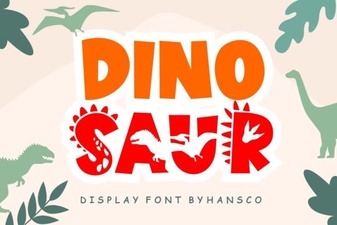 Creative Font Designs for Dinosaur Illustration Projects