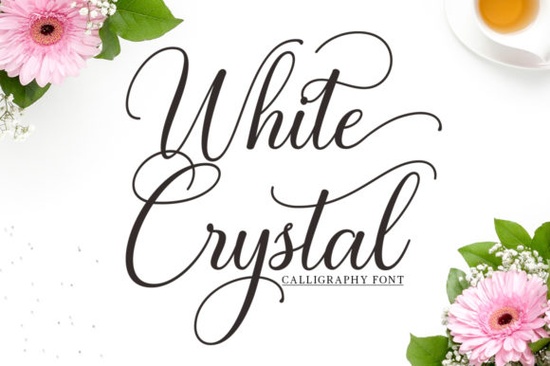
Finding the right typography for a branding project or a piece of wedding stationery can take hours of scrolling. If you need a typeface that balances modern flow with traditional elegance, the White Crystal Script Font is a highly practical choice. This modern calligraphy typeface features a naturally varying baseline and smooth, continuous lines. It gives off a classic, refined vibe without looking outdated, making it highly versatile for designers, crafters, and small business owners working on visual identities or print-on-demand products.
What makes this calligraphy style work for branding?
When you are designing a logo or a product label, readability is just as important as aesthetics. The varying baseline in this typeface mimics natural handwriting, which keeps the eye moving smoothly across the text. Unlike rigid, geometric scripts, the letters flow into one another with soft curves. This organic movement helps small businesses and boutique brands project a warm, approachable, and handcrafted image.
For print-on-demand sellers, this kind of fluid typography prints beautifully on textured materials. Whether you are creating canvas tote bags, ceramic mugs, or premium greeting cards, the smooth lines maintain their clarity even when scaled down. If you are ready to test it on your next mockup, you can easily add this specific typeface to your creative library and start experimenting with different layouts.
Which projects suit this typeface best?
Because of its elegant and classic structure, this font performs exceptionally well in industries that rely on a premium or personal touch. Here are a few practical applications where it shines:
- Wedding and event stationery: It works perfectly for invitation suites, place cards, and welcome signs where a romantic feel is needed.
- Cosmetic and skincare packaging: The delicate curves look highly sophisticated on minimal product labels and glass bottles.
- Boutique logos and wordmarks: Small fashion brands or artisan coffee shops can use it to create a memorable, custom-looking logotype.
- Social media graphics: Crafters and hobbyists can use it to add a polished, hand-lettered look to Instagram quotes or Pinterest pins without needing an iPad and stylus.
If you are working on a project related to baby showers or newborn photography, you might want to pair it with softer, rounded scripts designed for maternity announcements to create a gentle visual hierarchy.
How does it compare to other script styles?
Choosing the right script depends heavily on the mood you want to convey. While this typeface offers a clean, modern calligraphy look, other styles serve different design needs. For instance, if your brand requires a slightly rougher, more vintage aesthetic, you might explore textured script styles like Linkgray to give your design a gritty, handmade feel.
On the other hand, if you are designing for a luxury brand that needs a highly ornate, almost historical appearance, the traditional, sweeping calligraphy found in Madina might be a better fit. And for those who want something highly decorative with plenty of swashes for wedding invitations, looking into romantic wedding stationery alternatives like Ameliya will give you more flamboyant options.
What software do you need to use it effectively?
You do not need expensive software to get good results, but knowing how to handle the font files helps. Most modern calligraphy fonts come with OpenType features, including alternate characters and ligatures.
To access these special glyphs, you will want to use design programs like Adobe Illustrator, Photoshop, or Affinity Designer. These programs have a dedicated glyphs panel that lets you swap out standard letters for more decorative versions. If you are using simpler tools like Canva or basic word processors, the font will still look great, but you will only have access to the standard character set.
Quick setup checklist for your next design
Before you finalize your typography, run through this quick list to ensure your design looks professional:
- Check the kerning: Even well-made script fonts sometimes need slight manual spacing adjustments between specific letter pairs.
- Test the scale: Print a physical proof or view the design at full zoom to ensure the thin lines do not disappear.
- Pair it wisely: Always pair a flowing script with a clean, simple sans-serif or a classic serif for your body text to maintain readability.
- Avoid all-caps: Script fonts are designed for lowercase or title-case formatting. Typing in all capital letters usually breaks the connecting lines and ruins the flow.
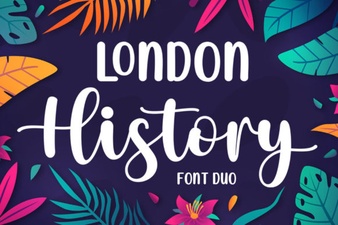 Creative Typography: London's History Through Duo Fonts
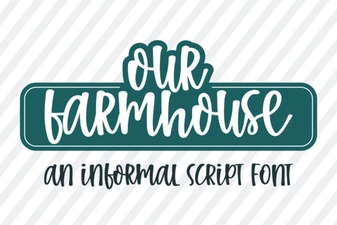 Our Farmhouse Font for Creative Projects
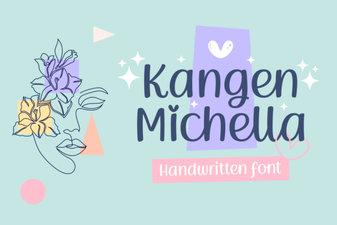 Kangen Michella Font: Creative Projects and Uses
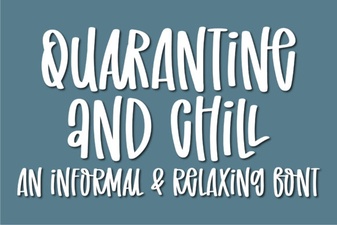 Quarantine and Chill Font for Creative Projects
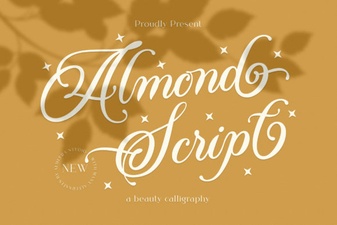 Almond Script: a Beautiful & Creative Font
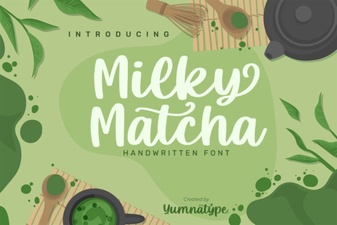 Milky Matcha Font: a Creative Design Toolkit